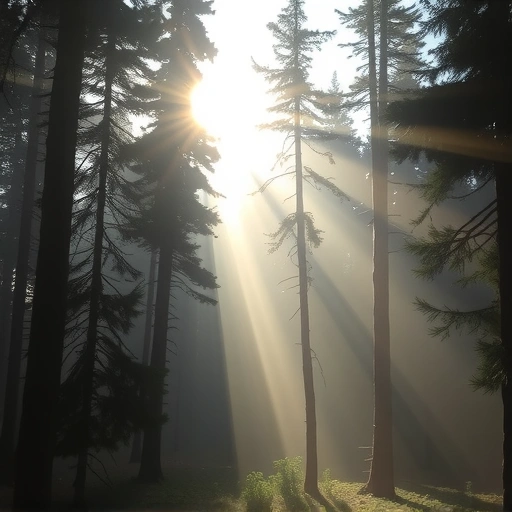
Understanding Midjourney Mood Boards
Mood boards offer a fresh way to influence Midjourney’s style, allowing you to upload images and links to inspire the AI. Once you’ve amassed images that reflect the style you want, Midjourney generates a unique, short code. By adding this short code to each of your prompts, you can maintain a consistent style across all generations. But how do mood boards stack up against style references?</P]
Mood Boards vs. Style References
Both mood boards and style references tweak the aesthetics. They impact the style Midjourney applies to your images. However, their methodologies differ, making one more suitable depending on your objectives. Let’s explore a side-by-side comparison to highlight these nuances.</P]
Experiment 1: Single Image Comparison
To start, a single illustrated image of a Forest King was tested as both a style reference and a mood board. The goal was to observe the subtle differences in output when using the same image in different contexts.</P]
Here’s what we used:</P]
- The image URL of the Forest King as a style reference (Explore TitanXT’s automation suite for managing your Midjourney projects efficiently).
- The same image added to a single image mood board profile code.
- The same seed number in both prompts, ensuring a fair comparison.
The results? Very similar. The colors were slightly softer in the mood board output, but overall, the single image mood board closely resembled the style reference result. But what happens when we start adding more images?</P]
Experiment 2: Multiple Images
Five extra illustration styles were added to the mood board, then re-tested against a style reference that included all six individual images. In this test, the differences emerged more clearly.</P]
Six images were used as style references, and the aesthetics of all images were blended to create one homogeneous style. The images were blended to create one unified style, then applied to generate the images. But with the mood board, the final images felt more diverse, without losing a cohesive look across the images.</P]
Here’s what we inferred from the second test:</P]
- Style references create a blended aesthetic.
- Mood boards result in more diverse images, staying cohesive but taking inspiration from the individual images in the set.
These observations come from tests, so we want to hear about your experience as well. Leave some thoughts below!
Experiment 3: Diverse Styles
Another test was performed creating a diverse mood board filled with cats of different color palettes and styles. Results showed that when using the set as style references, the aesthetics were blended together. However, the mood board maintained the diversity of styles. It’s important to note that the mood board didn’t add cats to every image; that was infrequent.</P]
The general rule is that a bigger difference between SREF and mood board results. Use them if the input images are more diverse.</P]
Experiment 4: Consistent SREF Codes
A mood board was created from images with a favorite SRA code called “forgotten film.” The side-by-side results from the SREF code and the mood board were similar, but still different. The color grading was a touch different. Use this to get more mileage out of your favorite SREF codes!
Mastering Mood Boards: Key Takeaways
Here’s a quick recap of how to maximize the impact of style references and mood boards:</P]
- Style references are best for maintaining a very specific look, especially with a single image or SREF code.
- Mood boards offer more flexibility. As you add more images, they serve as inspiration rather than dictating a single style.
Advanced Mood Board Techniques
Stylize Parameter
The stylize parameter controls the intensity of the mood board’s influence. When using it with mood boards, values between 0 and 100 produce the most noticeable changes. Try a value of 25 for minor changes, or a value above 100 for more intensity. There isn’t a huge difference between 100 and 1,000; be sure to test and see what you like best!</P]
Personalization Profiles
Personalization can greatly affect the style of your generations. Test different profiles to see what fits your vision for a project.
- The affect of using a personalization profile with a mood board profile is minimal. If you’ve seen something different, be sure to leave a comment!
Blending Mood Boards
Blending lets you use more than one mood board in a prompt! Each mood board will contribute equally to the results. You can also blend with SREF codes. Experiment with blending!</P]
Nostalgic Photorealistic Images
If you want an aesthetic that Midjourney has gaps for, make a mood board to capture the diversity. In these cases, a mood board does a better job of capturing diversity in reference images.
Explore Page Images
Like some images on the explore page? Drag and drop them into a mood board. If your liked images are diverse, the results will be as well.</P]
Color Palettes
Use mood boards to define your color palette. Create images with your desired color palette instead of using solid colors, then use these mood boards in prompts.</P]
V3 Model Images
If you want to see V6 renders of V3, add some images, and add “–v 3” to the end of your prompts.</P]
Style Tuner
V5 had a style tuner. If you created a style code that you liked, add images you’ve created to a new mood board, and bring those styles into V6!</P]
Drawing Style
Add some ink sketch images to a mood board and Midjourney will take inspiration from your own art!</P]
Abstract Elements
If you want something weird, try a Doppler effect-inspired mood board to generate interesting images with abstract elements.</P]
Mood boards can also be used with Midjourney’s niji 6 model, and likely the upcoming V7 model. Got your own use case for mood boards? Leave it in the comments below!
Conclusion
Do This Locally with Logen
Skip the subscription. Generate images like these on your own GPU — private, unlimited, no cloud dependency.
Midjourney vs Logen
| Feature | Midjourney | Logen |
|---|---|---|
| Cost | $10-60/mo | Free & Pro plans |
| Privacy | Cloud (images stored) | 100% local |
| Generations | Limited by plan | Unlimited |
| Internet Required | Always | No |
| Custom Models | No | Yes (any ComfyUI model) |
| GPU Required | No (cloud) | Yes (local) |
| Ease of Use | Discord bot | Desktop app |